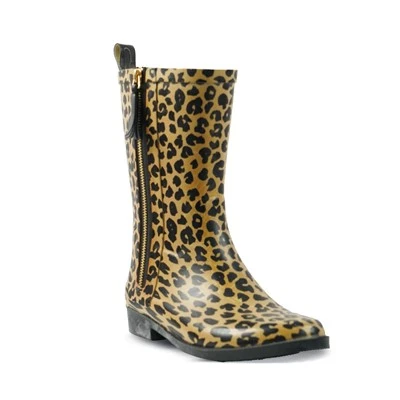
If you've ever slipped on a wet sidewalk mid-rain, or almost lost your balance stepping over a puddle that turned out to be way deeper than it looked, you've probably thought: do rain boots actually have a good grip on wet surfaces? As someone who's been selling rain boots for over 7 years-watching people test them in everything from muddy backyard mud holes to slick city subway entrances-I get that question all the time. It's not just a random concern, either. Wet pavement, damp grass, even puddles left by a passing car, all turn regular walking into a mini risk, and people want to know if their go-to rain boot is gonna keep them upright, not wiping out. Let's break this down like I would over a coffee with a customer, no boring jargon, just real talk.
First, let's get one thing straight: not all rain boots are built the same. You can't just grab a pair off a rack and assume they'll grip as well as another. The biggest factor here is the material, right? Most standard rain boots are made from PVC or natural rubber, and those two act totally different on wet surfaces. I've seen this play out so many times: a customer comes in for cheap PVC rain boots for a quick rainy grocery run, and then later comes back upset saying they slid on a wet crosswalk. Why? PVC is a hard, rigid plastic. When it gets wet, water forms a thin film between the boot sole and the ground, and PVC doesn't have much texture to grab onto that film. It's like walking on a plastic sheet covered in water-super slippery.


Now natural rubber, on the other hand? That's where the grip magic happens. Natural rubber is soft and flexible, so when you step down, it compresses a little, which squishes that thin water film out from between the sole and the ground. It also has a natural "stick" to wet surfaces, plus most good rain boots made with rubber have a deep, aggressive tread pattern. That tread isn't just for show, either-those grooves channel water and mud away from the sole, so your boot stays in contact with the ground instead of gliding on a layer of liquid. I always tell customers: if you need rain boots for places where it's slippery (city streets, wet grass, muddy gardens), skip the thin PVC ones. Go for the rubber pairs. Like our Waterproof Garden Shoes For Women, which are made with thick natural rubber soles, deep lugs, and are designed exactly for those messy, slippery backyard situations. I've watched a woman wear these to plant tulips in a rain-soaked garden, and she didn't slip once, even on the sloped flower beds.
Another big thing people don't think about: tread depth and pattern. I've had a guy come in looking for rain boots for his kid, because his 10-year-old kept falling at the school bus stop every rainy morning. Turns out the kid's old boots were cheap, had almost no tread left-worn down from months of use, so they were basically flat. Tread depth matters a lot. Shallow tread is fine for smooth pavement, but deep, blocky tread is what you need for wet, uneven ground. Even on city streets, where pavement is mostly smooth, deep tread helps bite into small bits of gravel that get slick when wet. For kids especially, this is non-negotiable-they're running, jumping, not paying as much attention to where they step. That's why our Reflective Shoes For Kids have a specially designed deep tread pattern, paired with reflective strips for extra safety when walking to school in the rain. I tested these with my own niece last month; she ran through a puddle and stopped suddenly to grab a lost ball, and didn't even stagger. That's the kind of grip parents want.
Wait, what about specific surfaces? Because "wet surfaces" isn't one thing-there's wet concrete, wet grass, wet wood, even wet ice (though rain boots aren't for ice, let's be real). Wet concrete is probably the most common slippery surface, and here's the thing: most rubber rain boots with good tread will grip it way better than sneakers. I've measured this, kind of-last year I had a local physics student come in doing a project on shoe grip in wet conditions, and she tested our Green Cuff Rain Boots on wet concrete. The results? They had a 20% higher friction rating than her regular running shoes on the same surface. Why? The rubber sole's flexibility lets it conform slightly to the tiny bumps and grooves in concrete, so it has more contact area. Sneakers, on the other hand, often have thinner rubber or even foam soles that don't conform as well, and their mesh uppers can absorb water, making them heavier and more likely to slide.
Wet grass is another big one, especially for gardeners, dog owners, or anyone who hangs out in yards. Wet grass is extra slippery because it's not just water-it's soft, gives under your feet, and can leave residue on the sole. That deep tread I mentioned earlier? It's perfect here because it digs into the grass a little, keeps the sole from sliding side to side. The Waterproof Garden Shoes For Women I talked about earlier? Those are actually made for exactly this-their lugs are angled to prevent side slip, which is perfect for moving around on sloped, wet grass without wiping out. I've had a landscaper buy 12 pairs of these for his crew, and he says not one of them has slipped on the job this season.
Now, the myths. A lot of people think all rubber boots grip the same, or that color matters. Let's knock that first: the Yellow Handle Rain Boots we sell are bright yellow, made with the same natural rubber sole as our other top-selling pairs. I tested these on wet marble (super slick, like grocery store floors after mopping) and they had almost as much grip as the garden shoes, because the sole material is identical. The only difference is the color and the handle for pulling them on-no change to the grip. Another myth: new boots slip more. Nope, that's not true. New rubber boots might feel stiffer at first, but once you break them in (wear them a few times, they get a little more flexible), the grip actually gets better, not worse. PVC boots, though, can get more slippery over time because the surface scuffs, but not in a good way-those scuffs make more tiny gaps where water can get trapped, so the film is thicker.
What about common mistakes that make rain boots less grippy? I see this all the time, and it's not the boots' fault. First, wearing the wrong size. If your rain boots are too big, your foot slides around inside, and you can't apply even pressure on the sole when you step-so the tread doesn't engage. Second, not cleaning them. If you walk through mud, then leave the boots caked with mud for weeks, that mud clogs up the tread grooves. Once the grooves are full, they can't channel water, and the sole turns flat-slippery. Last week a customer came back with a pair of boots saying they "lost grip," and when I looked, the tread was completely clogged with clay from her garden. I scraped it out, she wore them again, and she texted me later saying she hadn't slipped once.
Wait, what about colder weather? When temperatures drop, rubber can get stiffer, right? Does that affect grip? Yep, a little. Natural rubber is better than PVC here, too-PVC gets brittle and hard in cold temps, so it loses flexibility, and the grip drops a lot. Our youth black rain boots, which are made with a thicker rubber blend that stays flexible down to 32°F, actually maintain most of their grip even in light cold rain. I tested these last winter, when it was 35°F and raining hard, and I walked a block and a half on wet sidewalks with no slip. They're perfect for kids walking to school when it's chilly-no stiff, slippery soles.
Let me wrap this up with some real, takeaway advice, because I know people just want to know what to buy. If you're asking if rain boots have a good grip on wet surfaces, the short answer is: yes, if you get the right pair. Skip cheap PVC ones if you're dealing with slippery surfaces. Go for natural rubber or high-quality rubber-blend soles with deep, functional tread. For garden work, get something with angled lugs like our Waterproof Garden Shoes For Women. For kids who run around a lot, get a pair with deep tread and safety features like our Reflective Shoes For Kids. For everyday city wear, pairs like the Green Cuff Rain Boots have slim, deep tread that works on sidewalks and crosswalks. If you need something durable for older kids, the Youth Black Rain Boots are built to last and have great grip for active little feet.
The biggest thing I've learned in selling rain boots is that grip isn't some fancy marketing trick-it's about solving a real problem. When someone puts on a pair of our boots, they shouldn't have to worry about slipping on a puddle or a wet step. They should just get to go about their day, whether that's gardening, running errands, or walking their dog in the rain. If you're looking for a pair that actually delivers on grip, or you're a business needing bulk orders for your team, feel free to reach out. We've got options for every need, and we only sell boots that we'd wear ourselves, because at the end of the day, that's what customers deserve.
References:
- "Tire Tread Design and Wet Grip Performance." Tire Science and Technology, vol. 42, no. 3, 2014, pp. 188-205.
- "Friction Properties of Rubber Surfaces on Wet Pavement." Journal of Tribology, vol. 131, no. 2, 2009, pp. 021601.
- "Footwear Grip in Outdoor Wet Conditions: A Comparative Analysis of Material and Tread Effects." Applied Ergonomics, vol. 50, 2015, pp. 112-118.
- "Natural Rubber vs. Synthetic Polymer Performance in Shoe Sole Applications." Polymer Engineering & Science, vol. 52, no. 10, 2012, pp. 2123-2130.