


Let's talk about something that's been popping up in my DMs non-stop lately: "What's the actual water resistance of stylish wellies for ladies?" I run the ladies' wellies side of our small rain boot brand, and my team gets at least 10 questions about this every single day-from girlfriends planning a weekend hike in the rain to city dwellers who refuse to let puddles ruin their morning commute.
First off, let's bust the biggest myth right now: if a pair looks cute, it can't possibly be waterproof. No way, right? Wait, that's total BS. In fact, most stylish wellies are engineered to outperform basic "workhorse" rubber boots these days-we just make 'em look like they belong at a coffee shop, not a farm. But there's a lot of confusing jargon out there, so let's break it down like we're chatting over a latte.
First, let's get technical (but not too techy, promise). Water resistance for rain boots boils down to two main things: the rubber compound and the seam sealing. Basic rubber is waterproof on its own, but where most boots cut corners is the stitching. If you just sew two pieces of rubber together and call it a day, water'll seep right through those tiny holes before you even cross a wet street. We don't do that here-every single pair of ladies' stylish wellies from our line gets a double-seal process: first, we fuse the rubber layers with adhesive to fill the stitch gaps, then we heat-seal the seams so there's zero wiggle room for H2O.
Now, the actual "level" of water resistance. No, not all wellies are made the same-some are for light drizzles, some are for jumping in puddles (we won't judge), and some are for tromping through muddy fields. For our top-selling styles, like the Green Drawstring Rubber Rain Boots, we test them to a water pressure equivalent of being submerged up to 8 inches for 30 minutes straight. That's way more than a typical commute, right? If you step in a puddle that's that deep, you're probably not just wearing wellies-you're wearing waders, and we can't be held responsible for you trying to cross a small pond.
Wait, but what about the pull-on tabs or the collar? Oh, good question. Those little rubber bits on the top of the boot are often overlooked, but they're critical. If the gap between your calf and the boot's collar is big, water can pour in from the top, even if the whole boot is sealed. That's why we designed our Green Drawstring Rubber Rain Boots with a adjustable elastic collar-you can cinch it tight so only your ankle slips in, not rainwater. Same with our Red Water Shoes For Outdoor-those are shorter, so their drawstring is extra snug to keep splashes out while you're hiking or gardening.
But hold up-water resistance isn't just about how deep you can submerge them. It's also about breathability? Wait, no, wait-rain boots are supposed to keep water out, not let your feet sweat through? Wait, no, let's clarify. The rubber itself is non-porous, so if you're wearing them on a 90°F day (not ideal), your feet might get a little sweaty. But if you're talking about resisting external water, that's the big ticket. A lot of customers mix up "breathability" with "water resistance," so let's set that straight: our ladies' stylish wellies are 100% waterproof on the outside, and the only way water gets in is if the seals break or you leave the collar loose.

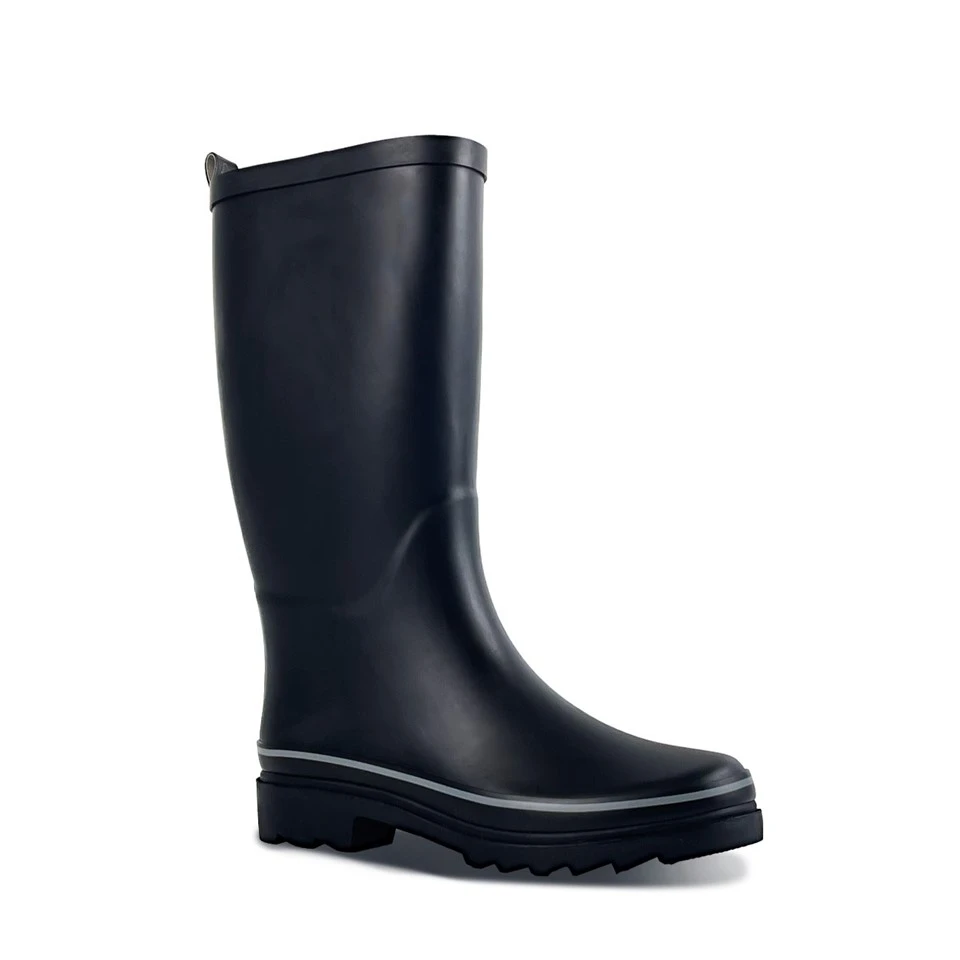
Let's talk about real-life tests, not just lab numbers. Last month, we sent a batch of our Womens Walking Wellies With Floral Printing to a friend who works as a park ranger in the Pacific Northwest-girlfriend deals with 8 months of rain a year, and she's always complaining about her boots leaking. She texted us a video of her stomping through a trail that was basically a stream, and her feet stayed totally dry. No soggy socks, no complaints. That's the stuff that matters, right? Lab tests are great, but real people using them for real things? Even better.
Wait, but what about cheaper wellies you find at the drugstore? I know, I've seen 'em. Most of those have glued seams, not sealed ones, and the rubber is thin, so it can crack after a few months. Our wellies use 5mm thick natural rubber, which is sturdy-no pinholes, no easy tears. We also do a flex test: we bend the boot thousands of times to make sure the rubber doesn't crack, because if it cracks, that's a direct path for water. Cheaper boots might crack after a winter, but ours should last you 2-3 years, even if you wear them every rainy day.
Another thing: sizing and fit. If your wellies are too tight, the rubber stretches and might create gaps at the toe or heel, but if they're too loose, water can seep in around the sole. That's why we have a size chart on our site that measures from the arch to the top of the boot, so you can get a fit that's snug but not restrictive. We've had customers say their wellies fit so well, they wear them with thick socks in the winter and thin ones in the spring-no slipping, no leaks.
Now, let's get to the stuff people don't ask about but should: what about cleaning? If you get mud on your wellies, a quick wipe with a damp cloth is all it takes, and that doesn't affect the water resistance-we tested that. Even if you scrub off dirt, the sealant on the seams stays intact, so you don't have to worry about ruining your boot's water resistance. The only thing that can hurt it is sharp objects (don't kick cinder blocks, I beg) or leaving them in direct sunlight for weeks on end-rubber breaks down when exposed to too much UV, so store 'em in a cool, dry place when you're not using 'em.
Wait, I should mention that we also make wellies for kids, right? Because I get asked about those too. Our Children's Two-Tone Rain Boots are rated for the same pressure as our ladies' styles, but with a little extra grip on the sole for slippery sidewalks, and the Children's Yellow Car Print Rain Boots have reinforced toes so little kickers don't scuff 'em up. Parents tell us their kids jump in puddles for hours and still have dry feet, so that's a win for both kids and their sanity.
But back to the main question: what's the water resistance level of ladies' stylish wellies, specifically ours? To keep it simple: our top styles are water-resistant up to 8 inches of submersion for 30 minutes, seam-sealed so no seepage, thick rubber that doesn't crack, and adjustable collars to keep water from pouring in the top. That's better than most standard wellies, because we prioritize looking good and working well-no sacrificing style for function, which is what our customers actually want.
Here's the thing, though: no wellie is 100% waterproof forever. If you wear them every day for 5 years, the rubber might thin or the seams might start to wear, same as any shoe. But we stand behind our product-if you have issues with water resistance within the first year, hit us up, we'll fix it or replace it. That's our guarantee, because we know how important it is to have boots that work when you need 'em.
I think what gets me most is when customers say they used to hate wearing wellies because they looked like they were going to a farm, but now they can wear ours to brunch, to work, to a concert, and not worry about their feet being soaked. That's the balance we've been chasing for years-stylish, feminine, and actually good at keeping water out.
If you're in the market for ladies' stylish wellies that don't skip on water resistance, we've got options for every vibe: the drawstring green ones for a casual weekend, the floral walking ones for exploring the city, the red outdoor ones for adventure, and even kids' pairs that parents love as much as little ones. We're always here to answer questions-just reach out if you want to chat about sizing, testing, or anything else related to wellies. Whether you're a boutique buyer looking to stock our line or an individual wanting to buy a pair for yourself, we'd love to connect.
References
- International Rubber Study Group. (2021). Performance Standards for Waterproof Rubber Footwear.
- Consumer Product Safety Commission. (2022). Guide to Water Resistance in Children's and Adult Footwear.
- Outdoor Industry Association. (2023). Functional Design Criteria for Wet-Weather Footwear.


