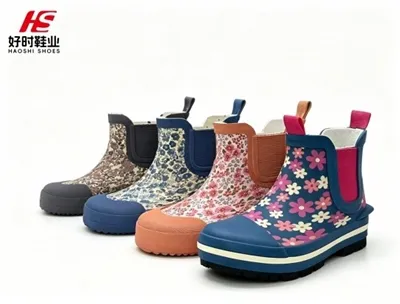
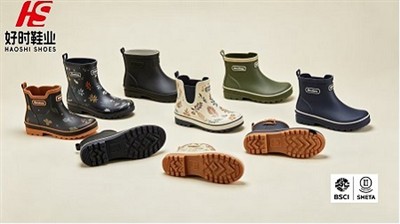
The performance of rain boots is determined by their material properties, structural design, and manufacturing process, serving as a key indicator of their stable function in wet and complex environments. As foot protection equipment specifically developed to block liquids and withstand harsh ground conditions, rain boots exhibit clear and measurable performance advantages in waterproofing, slip resistance, abrasion resistance, weather resistance, comfort, and environmental adaptability, providing reliable protection for various application scenarios.
Waterproofing is the primary technical indicator for rain boots. They rely on the low water absorption and impermeability of high-density waterproof materials to effectively block external moisture. Common materials such as natural rubber, polyvinyl chloride (PVC), and thermoplastic polyurethane (TPU) all possess excellent sealing properties, preventing liquid water from penetrating the boot body. High-top or semi-high-top structures combined with a tight-fitting system (such as boot loops, drawstring tightening, or elastic cuffs) further seal the seepage paths at the ankle and boot opening. High-end models utilize a heat-sealing process to treat seams, eliminating the leakage risks associated with traditional stitching and ensuring feet remain dry even after deep immersion or high-pressure water jets. The stability of waterproof performance directly determines the usability of rain boots in flooded, muddy, and rainy environments.
Slip resistance and abrasion resistance are crucial for walking safety on wet and rough surfaces. Rain boot soles are often designed with deep treads, blocky patterns, or cross-cut treads to increase the contact area and coefficient of friction, effectively reducing the risk of slipping on stagnant water, mud, or smooth surfaces. For environments where hard and sharp objects may be encountered, such as in agriculture, fishing, and municipal work, some rain boots incorporate a puncture-resistant layer in the sole or upper to protect against impacts and punctures from gravel, shells, and metal shavings. The outsole material is often made of abrasion-resistant rubber or modified synthetic materials, extending its lifespan on rough surfaces.
Weather resistance and environmental adaptability reflect the stability of rain boots in temperature changes and chemical environments. Cold-resistant rubber or TPU remains flexible even at low temperatures, preventing hardening and cracking, making it suitable for operations in cold seasons or high-latitude regions. Modified PVC or rubber materials enhance chemical resistance to oil, acids, and alkalis, ensuring the rain boots maintain structural integrity and functionality in chemical, wastewater treatment, and fishery processing environments. Anti-aging properties are achieved through the addition of UV protectants and antioxidants, slowing down material degradation under prolonged sun exposure and ozone.
Comfort and health are increasingly emphasized in modern rain boot design. While waterproofing limits breathability, antibacterial and odor-resistant coatings, quick-drying linings, and ergonomic lasts can alleviate stuffiness and odor problems caused by prolonged wear. Some warm rain boots incorporate fleece or neoprene layers inside the boot, balancing waterproofing with foot warmth in low-temperature environments. Insulated soles reduce the risk of electric shock in wading environments, while reflective markings on the boot enhance safety at night or in low-visibility conditions.
Mechanical performance and structural stability ensure the durability of rain boots under heavy loads and repeated bending. One-piece molding reduces seams, improving overall sealing and compressive strength; materials like EVA foam provide cushioning while maintaining lightweight construction, reducing impact on the feet during prolonged walking. The thickness of the sole and upper, as well as the layout of reinforcing ribs, can be adjusted to balance flexibility and impact resistance for different work intensities.
Overall, the performance system of these rain boots is based on superior waterproofing, combined with slip resistance, abrasion resistance, weather adaptability, health and comfort, and structural stability, enabling them to play a reliable role in agriculture, municipal work, fisheries, outdoor activities, and urban commuting. These quantifiable and verifiable performance characteristics not only ensure the rain boots' ability to cope with diverse environments but also establish their technological position and application value in the field of protective equipment.